Selecting the right Uv Curing Led in 2026 requires more than comparing wavelength and unit price. Global buyers must connect optical performance with production reality. A 395 nm lamp may look efficient on paper, yet a poorly controlled beam can leave adhesive edges uncured. That failure is expensive.
Industry evidence supports a careful approach. RadTech’s 2024 UV+EB Technology Report highlights continuing investment in energy-efficient curing and process control across industrial applications. The U.S. Department of Energy’s SSL R&D Opportunities report also emphasizes efficiency, thermal management, reliability, and improved LED control. These findings matter when evaluating suppliers across different regions. Ask for measured irradiance, delivered dose, wavelength tolerance, operating temperature, and lifetime data. Do not rely only on nominal electrical power.
Standards deserve equal attention. IEC 62471 helps assess photobiological risks, while IEC 61347-2-13 addresses LED controlgear requirements. A credible supplier should provide test conditions, calibration records, RoHS and REACH declarations, and clear batch traceability. Country-specific plug systems are less important than stable drivers, documented safety controls, and serviceable designs. Check whether the supplier can maintain performance after repeated thermal cycling. Ask for samples from production batches, not only demonstration units.
The difficult part is comparison. Datasheets often use different test distances and measurement methods. A spreadsheet can still mislead. Buyers should test curing depth, tack-free time, substrate temperature, and energy consumption using their own materials. Procurement teams may also examine regional inventory, warranty terms, spare parts, and export documentation. These details feel mundane. They often decide whether a global sourcing project succeeds. The best choice is not always the brightest lamp; it is the most verifiable, repeatable, and supportable system.
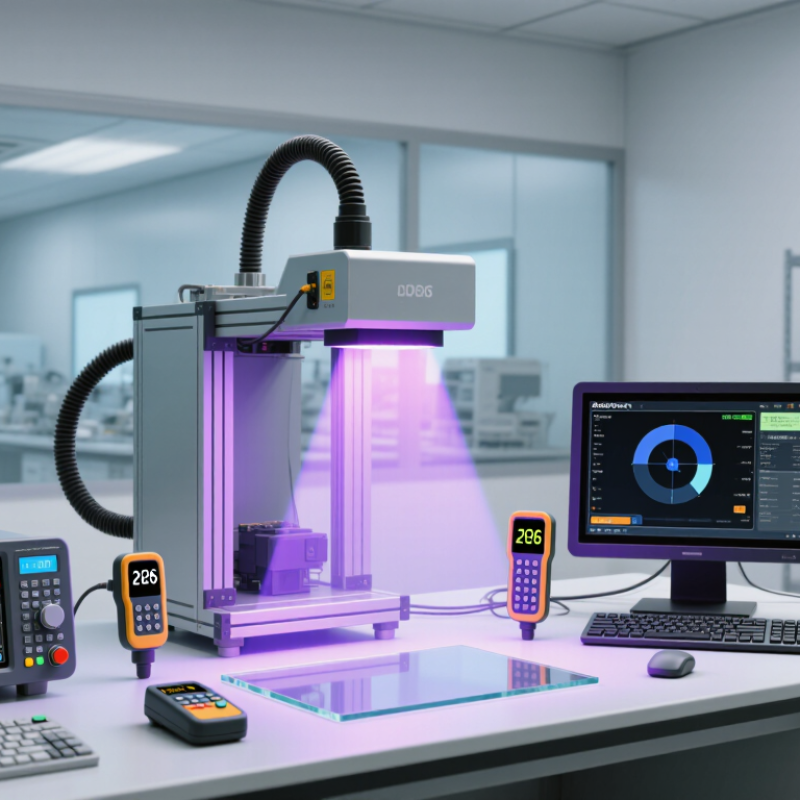
For global UV curing in 2026, define the process before comparing LED suppliers. Specify wavelength, irradiance, dose, exposure time, working distance, and substrate. Most applications use 365, 385, 395, or 405 nm, but the correct choice depends on photoinitiator absorption. Measure irradiance at the actual curing surface, not only at the window. A 2024 market assessment by MarketsandMarkets estimated the UV LED market could grow from about USD 1.1 billion in 2023 to nearly USD 2.0 billion by 2028. That growth reflects wider industrial adoption, but market forecasts vary.
Start with the material data sheet and confirm the required dose in mJ/cm². Then test cure depth, tack, adhesion, discoloration, and heat-sensitive parts. IEC 62471 requires photobiological risk evaluation, so include shielding, interlocks, labeling, and operator exposure controls. Regional sourcing also requires electrical compatibility, EMC documentation, thermal-management evidence, and consistent test methods. Ask for lifetime data at the intended junction temperature. “Long life” alone is weak evidence.
Tips: Request a sample module and run a 72-hour process trial. Check performance after warm-up. Compare dose uniformity across the full curing width. Keep the test records. I would not assume identical wavelengths produce identical results; lens design, cooling, drive current, and optical aging can change the process. A perfect specification rarely survives the factory floor. Leave room for revision.
| Requirement Dimension | Recommended Specification to Define | Typical Engineering Values | Why It Matters for Global Applications | Verification Method |
|---|---|---|---|---|
| Curing chemistry and photoinitiator response | Identify the coating, ink, adhesive, or resin and obtain its spectral absorption or recommended UV band. | Common UV LED curing bands include 365 nm, 385 nm, 395 nm, and 405 nm. The correct wavelength is chemistry-dependent, not selected by wavelength popularity. | A wavelength mismatch can cause tackiness, poor adhesion, incomplete through-cure, or excessive surface heating. | Review the formulation technical data sheet and perform dose-versus-speed trials using the final substrate. |
| Peak wavelength | Specify nominal peak wavelength, allowable tolerance, and measured spectral output. | Typical specification tolerances are approximately ±5 nm, although the required tolerance depends on the photoinitiator and application. | LED binning, optics, temperature, and operating current can influence the delivered spectrum. | Use a calibrated spectroradiometer or request a traceable spectral test report. |
| Irradiance at the work surface | Define minimum irradiance at the actual curing distance, coverage width, and line speed—not only the LED module rating. | Application levels commonly range from below 1 W/cm² for some spot or thin-film processes to more than 10 W/cm² for high-speed industrial curing. Values are application-specific. | Higher irradiance can reduce exposure time, but it does not automatically guarantee adequate depth cure or adhesion. | Measure with a wavelength-appropriate radiometer at multiple points across the illuminated area. |
| UV dose | Set a minimum dose in J/cm² for the complete process and record the exposure time. | Dose is calculated as: UV dose (J/cm²) = irradiance (W/cm²) × exposure time (s). For example, 2 W/cm² for 5 seconds delivers 10 J/cm² under stable conditions. | Dose provides a more useful process-control target than electrical input power alone. | Use a calibrated UV energy meter and establish lower and upper process limits. |
| Curing geometry and coverage | Define cure width, cure length, working distance, focal profile, edge tolerance, and shadowed areas. | Typical working distances range from a few millimetres to several tens of millimetres, depending on optics and machine design. | Uniformity can decline near edges, at greater distances, or on three-dimensional parts. | Map irradiance on a grid covering the full production area and define the permitted variation. |
| Production speed and duty cycle | Specify conveyor speed, pulse duration, repetition rate, daily operating hours, and required uptime. | Continuous operation, pulsed operation, and intermittent spot curing create different thermal and electrical loads. | A system sized for laboratory duty may not maintain output during multi-shift production. | Run a representative production trial at the maximum planned speed and duty cycle. |
| Thermal management | Define ambient temperature, permitted LED junction or case temperature, cooling method, airflow, and installation clearance. | Air cooling is common for moderate thermal loads; liquid cooling is often selected for compact, high-power systems or restricted machine spaces. | LED output and lifetime are strongly affected by junction temperature and inadequate heat removal. | Test thermal stability at the highest ambient condition and monitor temperature during continuous operation. |
| Output stability and lifetime | Request an output-maintenance target, test conditions, warranty basis, and replacement criteria. | UV LED systems are commonly specified by an L70-style output-maintenance point, but lifetime claims are meaningful only when temperature, current, optics, and duty cycle are stated. | A nominal service-life figure without test conditions is not sufficient for comparing suppliers. | Require ageing data, initial and aged irradiance measurements, and a defined recalibration or replacement interval. |
| Electrical input and control | Define input voltage and frequency, current-control method, power factor, electrical isolation, dimming, interlocks, and communication interface. | Global industrial facilities commonly use 100–240 VAC, 50/60 Hz, but the final specification must match the installation and local requirements. | Correct power architecture improves compatibility, safety, energy efficiency, and serviceability across regions. | Review electrical drawings and test operation at voltage extremes and during communication faults. |
| Safety and personnel protection | Define enclosure, access interlock, emergency stop, shielding, warning labels, leakage control, and operator exposure limits. | UV-A LED curing sources can present hazardous optical exposure even when visible light appears low. Risk assessment should address the 315–400 nm UV-A range. | Requirements differ by workplace, machine, and jurisdiction; an open beam should not be treated as inherently safe. | Conduct a machine-level photobiological safety assessment and verify safeguards after installation. |
| Compliance documentation | Request the applicable conformity declaration, electrical safety file, EMC test evidence, restricted-substance statement, and user instructions. | Common reference frameworks may include IEC 62471 for photobiological safety, IEC 60204-1 for machinery electrical equipment, and IEC 61000 series EMC requirements, subject to the final machine and market. | The UV module may be only one part of the conformity assessment for a complete curing machine. | Confirm the exact edition and market applicability with the importer, integrator, or qualified compliance assessor. |
| Environmental conditions | Specify ambient temperature, humidity, dust, vibration, chemical exposure, ingress protection, and clean-room requirements. | Many industrial systems are designed around approximately 5–40 °C ambient operation, but the permitted range is supplier- and application-specific. | Humidity, dust, process vapours, and vibration can reduce optical output, cooling performance, and reliability. | Validate the enclosure rating and perform environmental testing under actual factory conditions. |
| Optical window and maintenance | Define window material, transmission at the selected wavelength, contamination tolerance, cleaning method, and replacement availability. | Optical-window transmission depends on material, thickness, surface condition, wavelength, and contamination; no universal transmission value should be assumed. | Residue or incorrect window material can significantly reduce dose at the work surface. | Measure irradiance before and after cleaning, and define a maintenance threshold in the control plan. |
| Quality records and traceability | Require serial-number traceability, LED bin information, calibration records, incoming inspection limits, and change-notification terms. | A practical incoming inspection may record wavelength, irradiance, dose, temperature, electrical current, and uniformity against approved limits. | Documented limits make multi-country sourcing and replacement-part approval more consistent. | Approve a production sample against a signed specification before placing repeat orders. |
| Total cost of ownership | Compare purchase price, electrical consumption, cooling, calibration, downtime, spare modules, logistics, duties, and service support. | The lowest initial price is not necessarily the lowest cost when output degradation, process rejects, or international service delays are included. | A standardized module, documented spare strategy, and remote diagnostics can reduce lifecycle risk across regions. | Use a multi-year cost model based on operating hours, energy price, maintenance intervals, and expected production losses. |
Include LED modules, optics, drivers, cooling plates, testing, packaging, freight, insurance, duties, and installation labor. A cheap module may need a larger heat sink. That changes the machine design.
Heat can reduce LED performance and shorten operating life. Measure surface temperature during repeated production cycles. Do not trust one successful test.
Compare air freight, ocean freight, and regional stockholding. Use actual delivery records, not optimistic estimates. Port delays can interrupt production schedules. Keep replacement inventory available.
Request electrical safety, electromagnetic compatibility, photobiological safety, and material documentation. Check requirements for restricted substances, emissions, recycling, and product marking. One certificate is not universal proof.
Test the exact substrate, coating thickness, working distance, and line speed. Measure wavelength, irradiance, dose, uniformity, and surface temperature. Use calibrated instruments and repeated cycles. Test twice.
Request samples from multiple lots. Compare output stability after continuous operation and controlled thermal stress. Inspect cooling, optical window cleanliness, connectors, and maintenance access. Small differences matter.
Define the approved specification, golden sample, inspection points, packaging, and acceptable output variation. Confirm minimum order quantities, lead times, spare parts, and change notifications. Consider two qualified sources when capacity allows.
Do not focus only on curing speed. Long-term thermal behavior may matter more than expected. My early evaluations missed that. Recheck assumptions before signing.
Choosing the right Uv Curing Led for global sourcing in 2026 requires a structured evaluation of technical, commercial, and compliance factors. Start by defining the application requirements, including target materials, curing speed, working distance, exposure area, operating environment, and regional voltage conditions. Then compare available wavelengths, optical output, thermal stability, beam uniformity, efficiency, and expected service life to ensure consistent curing performance across different production sites.
Supplier assessment should cover product quality systems, relevant certifications, testing procedures, production capacity, traceability, and long-term technical support. Total cost should include unit price, tooling, energy consumption, maintenance, packaging, transportation, customs, and regional compliance requirements rather than focusing only on the initial quotation. Before placing a large order, validate samples under real operating conditions and check performance consistency between batches. A reliable sourcing plan should define acceptance criteria, quality inspections, delivery schedules, backup supply options, and communication procedures, helping buyers reduce risk while maintaining stable production worldwide.

 Yaguang Machinery