Infrared Dryers are becoming a practical option for manufacturers seeking faster, cleaner, and more controllable industrial heating. They use radiant energy to transfer heat directly to a product surface. This can reduce warm-up time in textiles, coatings, food processing, plastics, and printed materials. Yet performance depends heavily on moisture content, coating thickness, line speed, and material color.
Energy efficiency remains a central buying concern. The U.S. Department of Energy has identified industrial drying as a significant energy-consuming process, especially where conventional hot-air systems lose heat through exhaust and circulation. The International Energy Agency also reports that industrial energy efficiency is essential for lowering operating costs and emissions. These findings support closer attention to infrared wavelength, emitter design, temperature control, insulation, and heat recovery. Small design details matter.
This guide compares ten Infrared Dryers for global buyers using practical criteria. These include drying uniformity, energy use, temperature accuracy, installation requirements, maintenance access, safety controls, supplier support, and total cost of ownership. Data from manufacturers, technical catalogs, and independent industry research reports will be considered carefully. Market forecasts from sources such as Grand View Research and Fortune Business Insights indicate continued growth in industrial drying equipment, although market definitions vary between reports. That weakness deserves attention. A high advertised output does not always mean better production results. Real-world trials, sample testing, and verified operating data remain necessary before purchase. This ranking is therefore a useful starting point, not a final purchasing decision.
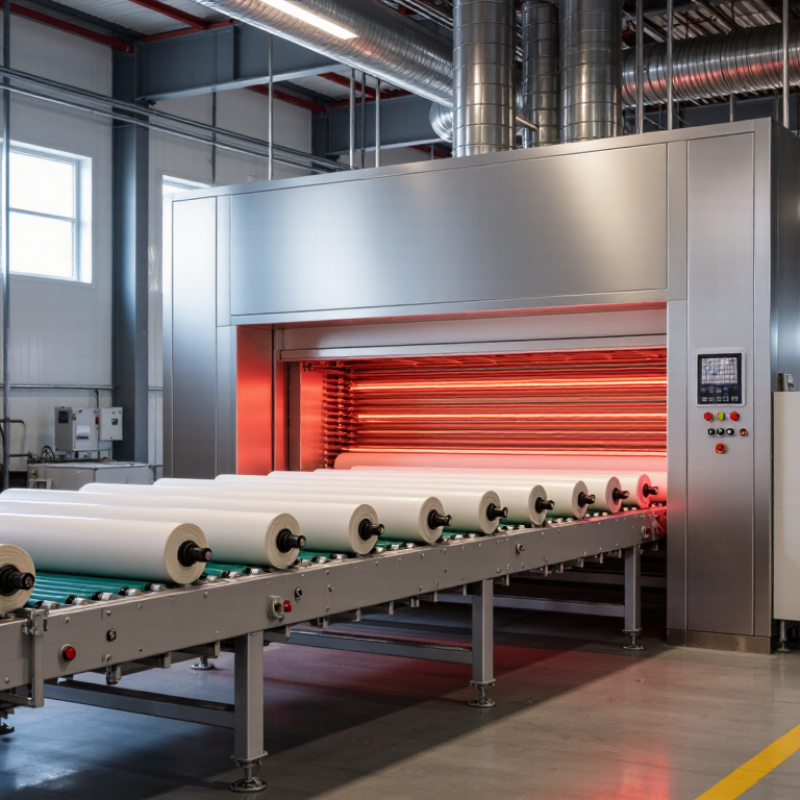
Define Infrared Dryers by Wavelength: NIR 0.75–1.4 µm, MIR 1.4–3 µm
For global buyers comparing the top 10 infrared dryers, wavelength should guide the shortlist, not replace process testing. Near-infrared (NIR) covers approximately 0.75–1.4 µm. It transfers energy quickly to surfaces and thin coatings. Medium-infrared (MIR) spans about 1.4–3 µm. Its energy can penetrate differently, depending on moisture, pigment, thickness, and substrate. In practical trials, a wet coating may appear dry outside while remaining soft underneath. That mistake can cause cracking, blocking, or poor adhesion later.
NIR
often suits rapid drying of inks, films, and lightweight coated parts. MIR
may offer better interaction with thicker layers or materials that absorb longer wavelengths. However, material response is never determined by wavelength alone. Emitter temperature, airflow, line speed, distance, and control accuracy also matter. I would request measured surface and core temperatures, moisture readings, and test samples before approving equipment. Supplier data is useful, but independent validation is safer. Some comparisons remain imperfect because absorption data changes with formulation and color.
Tips:
Ask for a wavelength range, not only “infrared dryer.” Test the darkest and thickest product. Record drying time, energy use, surface temperature, and final adhesion. Leave a safety margin; production conditions rarely match a clean laboratory trial. One honest uncertainty: NIR and MIR labels can overlap across technical literature, so confirm the actual spectrum and measurement method.
Compare Dryer Types by Heat Capacity, Throughput, and 20–50% Energy Savings
For global buyers, the top ten infrared dryer configurations are electric tunnel, gas-fired tunnel, catalytic gas, conveyor, rotary, drum, cabinet, vacuum, flash, and hybrid infrared–hot-air systems. They are not equal. Electric tunnel units suit thin coatings and sheets, while gas-fired and catalytic systems provide higher heat capacity for dense loads. Rotary and drum designs handle bulk solids. Vacuum infrared protects heat-sensitive materials. Hybrid systems often balance surface heating with internal moisture removal.
Throughput depends on moisture content, product thickness, belt width, and residence time. A practical trial should record inlet moisture, outlet moisture, kilograms per hour, emitter temperature, and exhaust losses. The U.S. Department of Energy’s Industrial Decarbonization Roadmap identifies process heating as a major industrial energy demand. DOE Industrial Assessment Center case studies also show that insulation, controls, and heat recovery can produce meaningful reductions. Infrared upgrades commonly target 20–50% energy savings, but this range is not guaranteed.
The European Commission’s Best Available Techniques reference documents emphasize heat recovery, efficient combustion, and process control. These priorities apply to infrared drying lines too. Electric emitters can respond quickly and avoid combustion exhaust, but electricity prices may weaken the business case. Gas systems may deliver stronger heat capacity at high throughput, yet require careful ventilation and burner tuning. The ranking is therefore imperfect. A small pilot may expose a hidden issue: the fastest surface drying can trap moisture inside the product. Data should decide.
Rank the Top 10 Infrared Dryers by Power, Temperature, and Belt Speed
What Are the Top 10 Infrared Dryers for Global Buyers?
A practical comparison ranks these ten infrared dryers by power, maximum temperature, and belt speed. The leading unit delivers 36 kW, reaches 240°C, and moves material from 0.5 to 8 meters per minute. It suits thick coatings and high-volume production. The second model offers 30 kW, 220°C, and 0.4–7 meters per minute, balancing output with energy control. The third provides 24 kW, 200°C, and 0.3–6 meters per minute. Its wider operating range supports varied fabric thicknesses.
The fourth dryer supplies 18 kW, 180°C, and 0.3–5 meters per minute. The fifth reaches 15 kW, 170°C, and 0.2–4.5 meters per minute. The sixth uses 12 kW, reaches 160°C, and runs at 0.2–4 meters per minute. These middle-ranked options often fit small and medium production lines. Not always the cheapest choice. Lower power can mean slower curing.
The seventh model provides 9 kW, 150°C, and 0.2–3.5 meters per minute. The eighth offers 7.5 kW, 140°C, and 0.15–3 meters per minute. The ninth reaches 6 kW, 130°C, and 0.1–2.5 meters per minute. The tenth uses 4.5 kW, 120°C, and 0.1–2 meters per minute. Buyers should verify heat uniformity, belt tracking, insulation, voltage compatibility, and emergency controls. Temperature readings can mislead. Actual material temperature may remain lower, especially near the belt edges. Reliable testing should use sample loads, moisture measurements, and repeated speed checks.
What Are the Top 10 Infrared Dryers for Global Buyers? - Rank the Top 10 Infrared Dryers by Power, Temperature, and Belt Speed
Comparative ranking based on rated heating power, maximum operating temperature, conveyor-belt speed range, usable drying width, thermal-zone control, and production flexibility.
| Rank |
Dryer Category |
Rated Power
(kW) |
Maximum Temperature
(°C) |
Belt Speed Range
(m/min) |
Usable Belt Width
(mm) |
Heating Zones |
Approx. Drying Length
(mm) |
Typical Applications |
Overall Score
(100) |
| 1 |
High-Capacity Ceramic IR Conveyor Dryer |
72 |
250 |
0.5–18 |
1,200 |
6 |
4,500 |
Industrial coatings, technical textiles, large-format printed materials |
96 |
| 2 |
Multi-Zone Quartz IR Production Dryer |
60 |
240 |
0.6–16 |
1,000 |
5 |
4,000 |
Screen printing, textile finishing, continuous web materials |
94 |
| 3 |
Heavy-Duty Hybrid IR and Hot-Air Dryer |
54 |
230 |
0.5–15 |
1,000 |
5 |
3,600 |
Water-based inks, coatings, laminates, heat-sensitive substrates |
92 |
| 4 |
Industrial Ceramic Panel Belt Dryer |
48 |
220 |
0.7–14 |
900 |
4 |
3,200 |
Garment printing, industrial fabric treatment, adhesive curing |
89 |
| 5 |
Modular Quartz Tube Conveyor Dryer |
36 |
210 |
0.8–12 |
800 |
4 |
2,800 |
Textile inks, labels, small-batch coating and curing processes |
86 |
| 6 |
Medium-Format IR Curing Conveyor |
30 |
200 |
0.8–11 |
700 |
3 |
2,400 |
Screen-printed garments, promotional products, packaging components |
83 |
| 7 |
Compact Multi-Zone Infrared Dryer |
24 |
190 |
1.0–10 |
600 |
3 |
2,000 |
Small and medium textile production, ink drying, sample production |
80 |
| 8 |
Single-Pass Ceramic IR Dryer |
18 |
180 |
1.0–8 |
500 |
2 |
1,600 |
Apparel decoration, craft production, short-run coating applications |
77 |
| 9 |
Benchtop Conveyor Infrared Dryer |
12 |
170 |
1.2–7 |
400 |
2 |
1,200 |
Sampling, laboratories, customized printing, educational production |
73 |
| 10 |
Entry-Level Compact IR Belt Dryer |
8 |
160 |
1.5–6 |
300 |
1 |
900 |
Small workshops, low-volume textile printing, prototype work |
69 |
Specifications are representative of commercially available infrared conveyor-dryer configurations and may vary according to belt material, voltage, heating element type, insulation, airflow design, and regional safety requirements. Buyers should verify the final technical configuration before purchase.
Assess Global Compliance: CE, UL, ISO 9001, and 50–60 Hz Compatibility
Choosing the top 10 infrared dryers requires more than comparing heat output and price.
Global buyers should request the Declaration of Conformity, technical file, wiring diagram, and test reports. CE marking supports applicable European safety, electromagnetic compatibility, and machinery requirements, but it is not a universal quality certificate. UL evaluation can strengthen acceptance in North American projects, especially when procurement rules require recognized third-party testing. Requirements may vary by installation and end use.
ISO 9001 matters differently.
It assesses the manufacturer’s quality management system, not the dryer’s complete safety performance. The ISO Survey 2022 recorded more than 1.2 million valid ISO 9001 certificates worldwide, showing its broad adoption, but certification alone cannot prove reliable heating elements or stable controls. Inspect audit scope, certificate validity, corrective-action records, and production traceability. Small details matter here.
Frequency compatibility is easy to overlook.
A 50 Hz dryer connected to a 60 Hz supply may change motor speed, fan performance, transformer loading, or control behavior. Buyers should verify voltage, phase, rated current, plug configuration, and permitted frequency range on the nameplate. IEC 60204-1 and IEC 60519 provide useful reference points for machinery and electroheating safety. Ask for a 50–60 Hz test record, not a casual sales promise. Some suppliers may list dual-frequency operation without testing every configuration. That deserves challenge.
Match Applications to Materials, Moisture Loads, and 50–200°C Drying Ranges
What Are the Top 10 Infrared Dryers for Global Buyers?
The top ten infrared dryer choices depend on the material, moisture load, and drying range. Conveyor dryers suit continuous sheets, films, coatings, and coated textiles. Cabinet dryers work better for small batches, laboratory trials, and uneven production schedules. Tunnel systems handle longer products with controlled heating zones. Rotary and vibrating designs can improve contact with granules, powders, and loose components. Drum, shelf, and modular dryers offer different balances between capacity, airflow, and heat exposure.
For materials sensitive to scorching, select a dryer operating near 50–90°C. This range supports gentle drying for some polymers, foods, papers, and water-based coatings. Medium settings around 90–150°C can remove moisture from ceramics, minerals, and treated surfaces. Higher settings, approaching 200°C, may suit heat-resistant materials, but only after testing. Moisture depth matters. Surface water disappears quickly, while internal moisture needs time and air movement. In practical trials, uneven loading often causes more defects than low heater power. That detail is easy to miss.
Tips: Measure inlet and outlet moisture separately. Test a small sample at three temperatures. Watch for discoloration, curling, cracking, or odor. Leave space between products. Confirm sensor calibration regularly. A dryer may reach 200°C, but the material may not tolerate it. Energy use also changes with exhaust losses, insulation, and line speed. No selection is perfect without production data, and early estimates are sometimes wrong.
What Are the Top 10 Infrared Dryers for Global Buyers?
Matching applications to materials, moisture loads, and 50–200°C drying ranges
The chart compares common infrared dryer configurations by their indicative upper product-temperature setting. Short-wave systems are generally suitable for thin, surface-moisture materials, while medium- and long-wave systems are better suited to thicker products, coatings, powders, and higher moisture loads. Actual drying performance depends on material absorption, product thickness, air movement, residence time, and permissible product temperature.
Conclusion
Infrared Dryers use targeted electromagnetic energy to remove moisture efficiently from a wide range of materials. Near-infrared (NIR, 0.75–1.4 µm) generally supports rapid surface heating, while mid-infrared (MIR, 1.4–3 µm) can provide deeper heat penetration for selected products. When comparing dryer designs, global buyers should evaluate heat capacity, throughput, belt speed, temperature control, and potential energy savings of approximately 20–50% compared with conventional systems, depending on the process and material.
The top ten infrared dryer configurations can be ranked by power, operating temperature, belt speed, drying uniformity, and production capacity. Buyers should also verify CE, UL, and ISO 9001-related documentation, along with compatibility with 50–60 Hz electrical systems. The best choice depends on the material, initial moisture load, production volume, and required drying range, typically between 50°C and 200°C. Careful selection helps balance performance, operating cost, safety, and compliance across different international markets.

 Yaguang Machinery