Top 5 Led Uv Curing Solutions You Must Consider Today?

Time:2026-05-11 Author:Ethan
0%

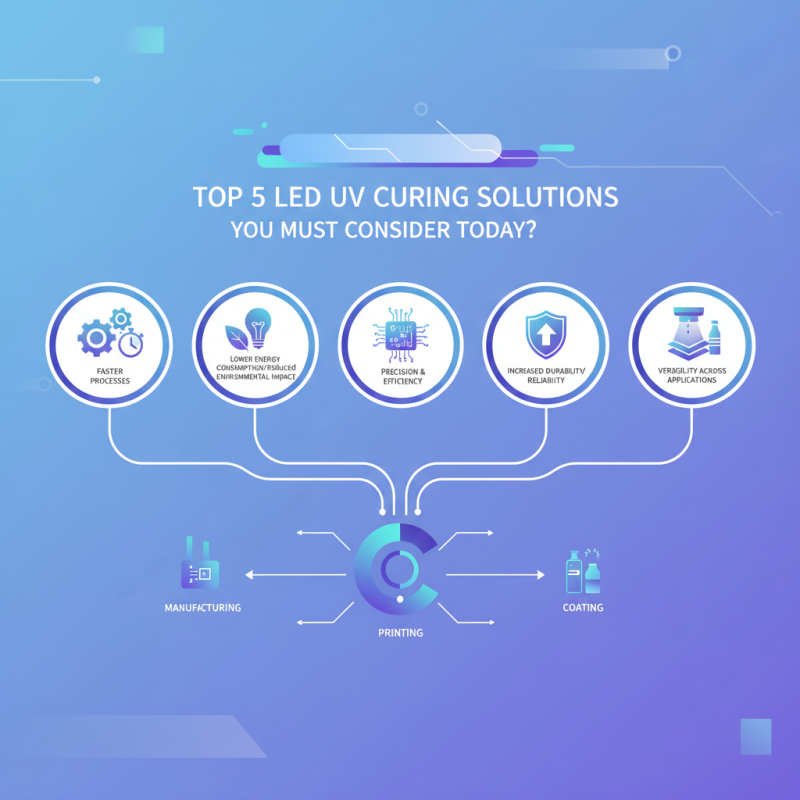
In the rapidly evolving world of manufacturing and printing, Led UV Curing Solutions have emerged as a game-changer. Industry expert Dr. Emily Reed, a prominent figure in UV technology, stated, “The future of curing lies in LED technology, offering faster processes and lower energy consumption.” This insight underscores the importance of understanding the top solutions available today.

As businesses seek higher efficiency, the right curing solution becomes crucial. Led UV curing technology is known for its speed, precision, and reduced environmental impact. Yet, many companies still overlook key factors when choosing their systems. It’s essential to evaluate options critically to avoid potential pitfalls.

Exploring the top five solutions can illuminate your choices. Each system boasts distinct features that may address specific needs or challenges. However, not all solutions are created equal. Organizations must assess their unique requirements and make informed decisions. In this article, we will delve into these top solutions, aiming for clarity and practicality in an often complex landscape.
Top 5 Led Uv Curing Solutions You Must Consider Today?

Understanding UV Curing Technology and Its Applications

UV curing technology has transformed several industries, especially printing and coatings. By utilizing ultraviolet light, this process rapidly solidifies inks, adhesives, and coatings. This method offers high efficiency, reducing the time needed for drying. The immediate curing also minimizes the risks of smudging and distortion, which can occur with traditional methods. However, this technology can be complex and may require specific safety precautions.

The versatility of UV curing extends beyond simple applications. It is used in automotive finishes, electronic components, and even in medical devices. There are challenges as well. Not all materials respond well to UV light, and improper calibration may lead to under-curing or over-curing. This inconsistency can affect product quality. Moreover, the initial investment for UV curing equipment can be substantial, prompting some companies to hesitate. Understanding these nuances is vital for anyone considering UV curing technology.

Key Features to Look for in LED UV Curing Solutions

When searching for LED UV curing solutions, it’s essential to focus on key features that enhance both efficiency and effectiveness. One critical factor is the curing speed. Data shows that LED UV solutions cure materials significantly faster than conventional methods, reducing production time by up to 30%. This speed is beneficial in high-volume settings where time equals money.

Another key aspect is energy consumption. LED systems are known for their lower energy use, with reports indicating they consume up to 80% less than traditional UV curing systems. This not only reduces operational costs but also minimizes heat generation, preventing issues related to substrate distortion. Reliability is also vital; industry reports indicate that systems with higher lifespan ratings can reduce downtime and maintenance costs.

Lastly, consider the wavelength. Different types of inks and coatings require specific wavelengths to cure effectively. Many LED UV solutions cover multiple wavelengths, making them versatile for various applications. This adaptability can lead to improved output quality. However, choosing the wrong wavelength for a specific application can lead to incomplete curing. Thus, understanding your materials and selecting an appropriate system is crucial.

Top 5 LED UV Curing Solutions You Must Consider Today

The chart above illustrates the importance rating (on a scale of 1 to 10) of various key features to consider when selecting an LED UV curing solution. Curing speed stands out as the most critical feature, while ease of use scores lower in comparison.

Top 5 LED UV Curing Systems for Various Industries

LED UV curing systems have transformed various industries through efficient and sustainable processes. Whether in printing, coating, or adhesive applications, choosing the right system is crucial. Focus on your specific needs to find the perfect solution.

Consider the material type you will be curing. Different LED UV systems work better with specific substrates. For example, some may excel with plastics, while others are tailored for glass. Understanding your materials will ensure optimal curing results.

Tips: Regular maintenance is essential. Keeping the equipment clean improves efficiency and extends its lifespan. Also, assess energy requirements. Selecting a system that suits your power setup not only saves costs but ensures reliability during production.

Evaluate the speed of curing as well. Some industries demand rapid production cycles. A system that cures quickly can give a competitive edge. However, do not sacrifice quality for speed. Balancing these factors is critical for long-term success.

Comparison of Performance and Efficiency in LED UV Curing Solutions

In recent years, LED UV curing technology has evolved significantly. Various solutions now promise improved performance and efficiency. The key is understanding how these solutions compare to meet specific industrial needs.

Performance metrics indicate that LED UV curing can achieve faster curing times, often in seconds. Reports suggest that these systems can cure substrates at temperatures as low as 40°C, minimizing thermal damage. However, not all LED systems provide uniform light output. This inconsistency can lead to under-curing in certain areas, highlighting a critical area for improvement.

Efficiency is another vital metric. Some LED UV systems report energy savings of up to 70% compared to traditional UV lamps. Yet, the initial investment can be a barrier for small businesses. Users may need to weigh long-term savings against upfront costs. It's essential to consider the reliability of the technology and select solutions that have demonstrated consistent results. Each application may require different assessments to ensure optimal performance.

Future Trends in LED UV Curing Technologies and Innovations

The future of LED UV curing technologies is rapidly evolving. Innovations are shaping how industries approach curing processes. Enhanced efficiency and reduced energy consumption are pivotal trends. These advancements lead to significant cost savings for businesses. Key areas of focus include improving the wavelength spectrum and optimizing light output.

Moreover, automation and smart technologies are gaining traction in the LED UV curing landscape. Integrating IoT solutions can streamline operations and enhance monitoring. This shift allows for real-time data collection and analysis. Yet, challenges remain in the scalability of these technologies. Many manufacturers are still assessing the best methods for large-scale implementation.

Emerging applications are also on the rise, especially in fields like printing and coatings. As more industries explore LED UV curing, it is crucial to stay informed. Understanding evolving technologies can help businesses make informed decisions. Experimenting with different solutions may lead to unexpected hurdles. Reflecting on those experiences can provide invaluable insights for future projects.

FAQS

: What is UV curing technology?

: UV curing technology uses ultraviolet light to rapidly solidify inks, adhesives, and coatings for various applications.

How does UV curing benefit industries?

It enhances efficiency by reducing drying time and minimizing smudging and distortion compared to traditional methods.

What are the applications of UV curing technology?

It's used in automotive finishes, electronic components, and even medical devices for effective production.

Are there challenges with UV curing?

Yes, not all materials respond well to UV light, and poor calibration can lead to inconsistencies in curing.

What should I consider when choosing a LED UV curing system?

Focus on the material type you will be curing, as different systems work better with specific substrates.

Why is regular maintenance important for UV curing equipment?

Keeping the equipment clean improves efficiency and extends its lifespan, enhancing overall production reliability.

How does curing speed affect production?

A faster curing system can give a competitive edge, but maintaining quality should not be compromised.

What should I assess regarding energy requirements?

Choosing a system that suits your power setup is crucial for cost savings and ensuring dependable production.

What happens if UV curing is not properly calibrated?

Improper calibration can lead to under-curing or over-curing, negatively impacting the quality of products.

Why might companies hesitate to invest in UV curing equipment?

The initial investment for UV curing equipment can be substantial, making some companies wary of adopting the technology.

Conclusion

The article titled "Top 5 LED UV Curing Solutions You Must Consider Today" provides an insightful overview of LED UV curing technology, highlighting its diverse applications across various industries. It begins by explaining the fundamental principles of UV curing technology, followed by key features that should be considered when selecting LED UV curing solutions, such as efficiency, speed, and compatibility with materials.

In the subsequent sections, the article outlines the top five LED UV curing systems tailored for different industrial needs, analyzing their performance and efficiency in real-world applications. Lastly, the discussion on future trends in LED UV curing technologies emphasizes ongoing innovations that promise to enhance effectiveness and sustainability. Overall, this comprehensive guide serves as a valuable resource for anyone looking to understand and implement LED UV curing solutions in their operations.

Ethan

Ethan

Ethan is a seasoned marketing professional with a deep expertise in our company's innovative product line. With a passion for sharing knowledge and insights, he takes the lead in regularly updating our corporate blog, where he explores industry trends, product features, and effective marketing......