China Top Industrial UV Curing Lamps Manufacturers?

Time:2026-10-03 Author:Aria
0%

China has become a major manufacturing base for Industrial Uv Curing Lamps, serving printing, electronics, coatings, adhesives, and packaging industries. However, identifying reliable suppliers requires more than comparing prices or factory photographs. Buyers should examine lamp output, ultraviolet wavelength, cooling design, reflector quality, and operating stability.

Real production experience matters. A dependable manufacturer should explain how its lamps perform under continuous operation, not only provide attractive technical figures. Details such as quartz tube quality, electrode life, cable insulation, and replacement-part availability can affect daily production. Ask for test records, sample results, and application references. Small details often reveal larger capabilities.

This guide reviews China’s leading Industrial Uv Curing Lamps manufacturers through practical purchasing criteria. It considers manufacturing experience, engineering support, quality control, customization ability, and after-sales service. Certifications can support credibility, but they should not replace independent verification. A certificate alone proves little.

Some suppliers may offer impressive power ratings while providing limited information about heat management. That deserves attention. Excessive heat can shorten lamp life, damage substrates, or reduce curing consistency. Buyers should also confirm compatibility with existing equipment, conveyor speed, reflector dimensions, and control systems.

The market is competitive, yet not every manufacturer fits every application. A supplier experienced in offset printing may not understand specialized electronic coatings. Technical communication can also be uneven. Careful questions remain essential. By comparing measurable performance with documented experience, manufacturers can identify suitable Chinese partners and reduce costly trial-and-error during installation.
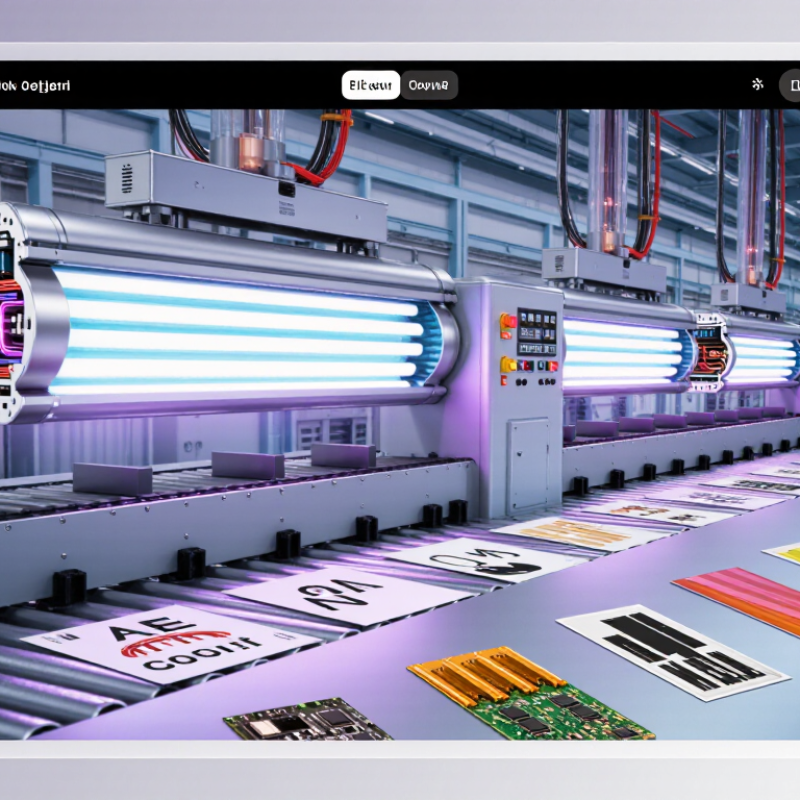
China Top Industrial UV Curing Lamps Manufacturers?

Industrial UV Curing Lamps: Definition, Functions, and Applications

Industrial UV curing lamps are light sources that harden coatings, inks, adhesives, and resins through photochemical reactions. Most systems use ultraviolet energy between 365 and 405 nanometers. Traditional arc lamps produce broad-spectrum output, while UV LED systems deliver focused wavelengths with lower heat and faster switching.

Their main function is controlled curing. Irradiance affects surface hardness, while exposure time influences curing depth. A production engineer should measure both values, not rely on lamp wattage alone. Reflectors, cooling systems, and conveyor speed also change the final result.

In real workshops, a clean quartz window can improve consistency. Dust can quietly reduce output.

These lamps support printing, electronics assembly, optical bonding, flooring, woodworking, and automotive component production. UV curing can reduce waiting time and solvent use, but it is not automatically suitable for every material. Pigmented coatings may block light beneath the surface. Some adhesives also need specific wavelengths. That detail is easy to overlook.

Reliable equipment should include shielding, interlocks, temperature monitoring, and documented irradiance tests. Operators need suitable eye and skin protection, even when the lamp appears enclosed.

Lamp aging, LED intensity loss, and uneven distance from the workpiece can create weak curing zones. I have found that process validation often matters more than a higher-rated lamp. The strongest lamp is not always the best choice. Manufacturers should provide measurable specifications, service guidance, and realistic application data.

Key Technologies Used in Industrial UV Curing Lamp Manufacturing

China Top Industrial UV Curing Lamps Manufacturers?

Industrial UV curing lamp manufacturing now depends on more than lamp intensity. It requires controlled wavelength, stable heat management, and measurable energy delivery. MarketsandMarkets estimates the global UV curing system market could grow from about USD 1.3 billion in 2023 to over USD 2 billion by 2028. This growth reflects demand for faster production and lower solvent use.

UV LED Modules and Optical Precision

UV LED modules commonly operate at 365, 385, 395, or 405 nanometers. Each wavelength suits different photoinitiators and coating depths. Manufacturers therefore select LED chips, lenses, reflectors, and quartz windows as one optical system. Uniform irradiance matters. A bright center with weak edges can leave uncured areas on a moving production line. Precision current drivers also reduce flicker and protect LEDs from sudden electrical stress.

Thermal Control

Thermal control remains a practical challenge. Cooling plates, air channels, and liquid systems must remove heat without disturbing optical alignment.

Process Validation

RadTech technical reports emphasize dose measurement, process validation, and compatibility between formulations and curing equipment. In production, radiometers should verify irradiance and total dose at the substrate, not only at the lamp face. That detail is often missed.

Reliability Factors

No design is perfect. Dust, aging lenses, and inaccurate sensors can quietly reduce cure quality. A reliable manufacturer uses temperature monitoring, closed-loop power control, and documented testing across working distances. Published forecasts differ, so buyers should examine test methods rather than trust market figures alone.

How to Evaluate China’s Top UV Curing Lamp Manufacturers

Evaluating China’s top industrial UV curing lamp manufacturers requires more than comparing online prices. A reliable supplier should explain lamp wavelength, power stability, cooling methods, and expected service life. Ask for measured test data, not broad promises. Request samples under your actual curing conditions. Small details matter.

During a factory audit, inspect assembly areas, aging-test equipment, and electrical safety controls. Check whether each lamp has a traceable serial number and inspection record. Experienced manufacturers can explain how temperature affects UV output. They should also recommend suitable reflectors, ballasts, and ventilation systems. If every answer sounds perfect, be cautious.

Review production capacity, quality procedures, and delivery history with equal attention. Confirm whether replacement parts remain available after installation. Clear drawings and response times reveal technical maturity. Certifications should match the destination market and product category. Do not rely on certificates alone. Speak with technical staff, not only sales representatives. A practical trial may expose uneven intensity, slow support, or installation gaps. I would record these weaknesses instead of hiding them, because real production rarely behaves like a showroom test.

China Top Industrial UV Curing Lamps Manufacturers? - How to Evaluate China’s Top UV Curing Lamp Manufacturers
No. Evaluation Dimension What to Check Objective Benchmark or Evidence Recommended Verification Method Suggested Weight
1 UV Wavelength Compatibility Whether the lamp output matches the photoinitiator and coating, ink, adhesive, or resin chemistry used in the application. Common industrial UV curing ranges include UVA around 315–400 nm, UVB around 280–315 nm, and UVC around 100–280 nm. The required wavelength must be confirmed against the material supplier’s curing specification. Request a measured spectral power distribution report and compare the peak wavelength and effective bandwidth with the process requirement. 15%
2 Optical Output and Irradiance Actual UV intensity delivered to the work surface, not only the lamp’s electrical input power. Performance should be stated as measured irradiance, such as mW/cm², at a defined working distance, exposure window, reflector condition, and operating temperature. Use a calibrated UV radiometer at the same distance and position used in production. Compare center, edge, and machine-direction readings. 15%
3 Exposure Dose Control Whether the system can deliver a stable UV dose for the required line speed and curing time. UV dose is calculated as irradiance multiplied by exposure time. The unit is commonly mJ/cm². A valid specification should define the target dose and acceptable process tolerance. Record irradiance and line speed, then verify dose using radiometer measurements and cured-part testing. 12%
4 Electrical Efficiency Energy consumption, power stability, power factor, and the relationship between electrical input and useful UV output. Compare rated input power, operating voltage, current, power factor, warm-up requirements, and output stability under continuous operation. Check the technical datasheet and measure electrical parameters with a power analyzer during normal operation. 10%
5 Thermal Management Cooling design and temperature control for the lamp, reflector, substrate, and surrounding equipment. High-power UV systems may require forced-air or liquid cooling. The supplier should specify cooling flow, operating temperature limits, and protection against overheating. Review thermal drawings, alarm functions, temperature sensors, and test the equipment during the longest expected production cycle. 10%
6 Service Life and Output Retention Expected operating life and the rate at which useful UV output declines over time. Service life should be defined by operating hours and an output-retention criterion rather than by hours alone. Lamp life depends on power level, cooling, switching frequency, and operating conditions. Request life-test records, replacement criteria, output-decay data, and a recommended maintenance schedule. 10%
7 Process Uniformity Consistency of UV intensity across the effective curing width and throughout repeated production cycles. A credible supplier should provide a uniformity map or measurement method covering the full curing area, including the edges and lamp-to-substrate working distance. Measure multiple points across the curing zone and calculate the difference between maximum and minimum readings. 10%
8 Safety and Compliance Protection from UV exposure, high voltage, ozone, hot surfaces, and unintended machine access. Industrial equipment should include shielding, interlocks, warning labels, emergency-stop integration, and suitable electrical protection. Photobiological risk evaluation can be referenced against IEC 62471. Inspect the safety circuit, guarding, interlocks, warning labels, electrical documentation, and applicable conformity declarations. 8%
9 Integration and Controls Compatibility with conveyors, printers, coating lines, PLCs, sensors, and production monitoring systems. Important functions may include intensity adjustment, shutter control, fault alarms, lamp-status feedback, cooling monitoring, and communication interfaces. Conduct an integration test using the intended control voltage, communication protocol, line speed, and emergency-stop sequence. 5%
10 Quality Management and Traceability Control of raw materials, assembly processes, calibration, inspection, and product identification. Look for documented quality procedures, serial-number traceability, incoming inspection, final testing, and calibration records. ISO 9001 certification may support the evaluation but does not replace product testing. Request a quality certificate, sample inspection report, calibration certificate, and corrective-action procedure. 8%
11 Customization Capability Ability to adapt lamp length, wavelength, reflector geometry, cooling, mounting, control interface, and working distance. Technical proposals should include drawings, optical assumptions, electrical loads, cooling requirements, and acceptance criteria specific to the application. Compare the supplier’s engineering drawing and prototype test results with the actual machine layout and curing target. 4%
12 After-Sales Support and Total Cost Availability of spare parts, technical response, maintenance support, warranty terms, and total ownership cost. Total cost should include purchase price, electricity, cooling, consumables, replacement parts, downtime, calibration, and maintenance over the planned operating period. Evaluate the warranty document, spare-parts list, response-time commitment, maintenance plan, and three-year operating-cost estimate. 3%

Evaluation note: Weighting is a practical reference for supplier comparison. Final selection should be based on application-specific curing trials, independently verified measurements, safety review, and total cost of ownership.

Leading Manufacturer Categories and Product Capabilities in China

China Top Industrial UV Curing Lamps Manufacturers?

China’s industrial UV curing market includes several manufacturer categories. UV LED specialists produce systems for inks, coatings, adhesives, and electronics. Traditional lamp manufacturers supply mercury, metal halide, and iron-doped UV sources. Some factories combine both technologies. That flexibility matters for different production lines.

Product capability varies widely. Experienced manufacturers offer wavelength options, adjustable irradiance, water or air cooling, and modular lamp sizes. UV LED systems often support precise control and lower heat transfer. Arc-lamp systems can deliver strong output across broader spectral ranges. Custom suppliers may design reflectors, shutters, conveyor modules, and PLC communication interfaces. They should also provide measured irradiance data, thermal tests, and service records.

Ask for evidence, not polished claims. A reliable factory can explain lamp life under real operating conditions. It should identify testing instruments and calibration intervals. Electrical safety documents and export compliance records also deserve careful review. Some suppliers quote peak intensity without describing distance or measurement conditions. That comparison can mislead buyers. Small details matter.

Factory experience is equally important. A supplier familiar with narrow web printing may not understand three-dimensional adhesive curing. Sample testing should use the buyer’s substrate, speed, and coating thickness. Results may reveal shadowing, overheating, or incomplete curing. Not every catalog specification survives production. That is an uncomfortable, but useful, finding.

Quality Standards, Customization, and Purchasing Considerations

China Top Industrial UV Curing Lamps Manufacturers?

When evaluating Chinese industrial UV curing lamp manufacturers, quality begins with measurable performance. Ask for irradiance data at the working distance, not only rated power. Wavelength accuracy matters because coatings respond differently to UVA, UVB, and UVC ranges. A reliable supplier should provide calibration records, operating temperature limits, and electrical safety test results. Request production samples. Test them on your actual line.

Customization can involve more than lamp length. Experienced manufacturers may adjust reflector geometry, cooling channels, mounting holes, cable positions, and control interfaces. Water-cooled systems need stable flow protection. Air-cooled units require practical ventilation space. Small design details matter. Poor heat removal can shorten lamp life and damage nearby components. However, customization is not automatically an advantage. I have seen projects become expensive after unnecessary modifications. Define the curing area, substrate speed, exposure distance, and available power before requesting a quotation.

Purchasing decisions should include more than the initial unit price. Compare expected service life, replacement lamp costs, delivery times, technical support, and warranty conditions. Ask whether the manufacturer can supply inspection reports for each batch. A factory audit, video inspection, or independent pre-shipment check can reveal inconsistent assembly. Confirm documentation, installation guidance, and spare-part availability in writing. Some suppliers respond quickly before payment but slowly during troubleshooting. That risk deserves attention. A small pilot order is often wiser than a large commitment. Test adhesion, surface hardness, curing depth, and temperature changes over several production cycles.

Industrial UV Curing Lamp Selection: Common LED Peak Wavelengths

Industrial UV LED curing systems commonly use peak wavelengths of 365, 385, 395, and 405 nm. The correct wavelength depends on the photoinitiator and spectral absorption characteristics of the adhesive, coating, or ink.

When evaluating manufacturers, buyers should also verify optical output consistency, thermal management, irradiance uniformity, lifetime data, electrical safety, EMC performance, and applicable requirements such as IEC 62471, CE, RoHS, and IP protection ratings. Customization may include wavelength combinations, working distance, cooling method, beam shape, curing area, control interface, and conveyor integration.

FAQS

What are industrial UV curing lamps used for?

They harden coatings, inks, adhesives, and resins through photochemical reactions. Common uses include printing, electronics, flooring, woodworking, and optical bonding.

Which wavelengths are commonly used?

Many systems operate between 365 and 405 nanometers. The correct wavelength depends on the material and its photochemical response.

Does higher lamp wattage always produce better curing?

No. Irradiance, exposure time, distance, cooling, and conveyor speed all affect curing quality. The strongest lamp is not always the best choice.

How can manufacturers compare curing equipment fairly?

Request measured irradiance data, testing distance, calibration details, and operating conditions. Peak intensity alone can create a misleading comparison.

What is the difference between LED and traditional arc systems?

LED systems provide focused wavelengths, lower heat transfer, and fast switching. Arc systems offer broader-spectrum output for some demanding applications.

What problems can appear during real production?

Pigmented coatings may block light beneath the surface. Uneven distance can create weak curing zones, while excessive heat may damage sensitive parts.

What safety features should a curing system include?

Look for shielding, interlocks, temperature monitoring, and documented irradiance tests. Operators still need suitable eye and skin protection.

How should buyers evaluate a supplier’s practical ability?

Test samples using the actual substrate, line speed, and coating thickness. Check for shadowing, overheating, or incomplete curing. Catalog claims may not survive production.

How does maintenance affect curing consistency?

A clean quartz window helps maintain output. Dust quietly reduces performance, while aging lamps or LEDs can produce uneven results.

What information should a manufacturer provide?

It should provide measurable specifications, service guidance, thermal data, and realistic application results. I would also question unclear lamp-life claims.

Conclusion

Industrial Uv Curing Lamps are specialized equipment used to rapidly cure, dry, or harden UV-sensitive coatings, inks, adhesives, and resins in industrial production. By delivering controlled ultraviolet energy, these lamps can improve processing speed, surface quality, production consistency, and material performance across applications such as printing, electronics, packaging, woodworking, automotive components, and general manufacturing. Their design may include mercury-based, metal-halide, LED, or hybrid UV technologies, supported by optimized optical systems, cooling structures, electronic controls, and energy-management features.

When evaluating China’s top manufacturers, buyers should consider technical expertise, lamp performance, service life, energy efficiency, temperature control, safety design, and production quality management. Reliable suppliers should be able to provide stable output, accurate wavelength selection, system integration, customized dimensions, and compatibility with existing production lines. Purchasing decisions should also include testing procedures, certifications, warranty terms, spare-part availability, delivery capability, and after-sales support. A careful comparison of product capabilities and customization services can help businesses select suitable Industrial Uv Curing Lamps for efficient, dependable, and cost-effective production.

Aria

Aria

Aria is a dedicated marketing professional with a deep passion for innovative strategies and a keen understanding of our company's product offerings. With a wealth of experience in the industry, Aria excels at crafting engaging content that highlights the unique features and benefits of our......