When it comes to UV curing technology, the choice of a UV adhesive curing lamp is pivotal. These lamps play a crucial role in the curing process of adhesives in various industries, from automotive to electronics. Selecting the right lamp can greatly influence the quality of the final product. The performance of UV adhesive curing lamps varies significantly based on factors like intensity and wavelength.
Many professionals may overlook the importance of investing in high-quality equipment. A subpar lamp could lead to incomplete curing, resulting in compromised bonds. On the other hand, the right UV adhesive curing lamp optimizes performance and ensures durability.
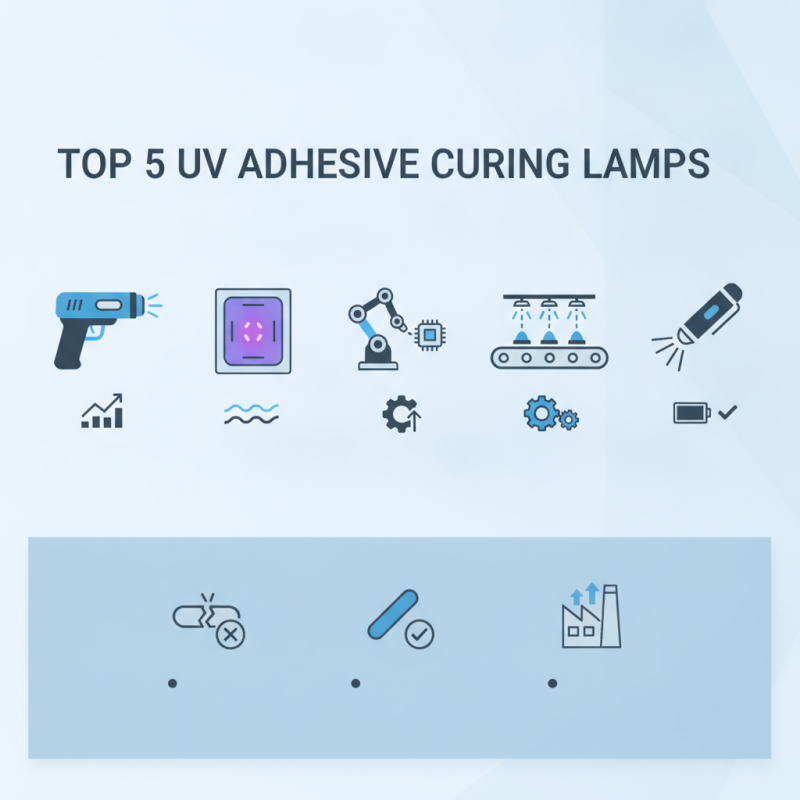
This article explores the top five UV adhesive curing lamps. Each option demonstrates unique features and benefits for different applications. Understanding these choices allows users to make informed decisions. Ultimately, investing in the right lamp could significantly enhance production efficiency and product reliability.
UV adhesive curing is a critical process in various industries, from manufacturing to crafts. The effectiveness of this process hinges on the proper use of UV lamps. These lamps emit ultraviolet light that initiates polymerization in UV adhesives. Understanding the nuances of this technology is essential for optimal performance.
When selecting UV lamps, consider the wavelength. Different adhesives require specific wavelengths for optimal curing. A mismatch can result in incomplete curing, leading to weak bonds. This is a common oversight. Users often assume all UV light is the same, but that's not true.
Tips: Always test the curing process with trial runs. This will help identify the right settings. Monitor the temperature during curing. Excessive heat can degrade the adhesive.
Additionally, the quality of UV lamps varies. Not all lamps are created equal. Many users find that cheaper options do not provide sufficient intensity, leading to inconsistency. Regular maintenance of the lamps is often neglected. Clogged or dirty lamps can significantly hinder performance, resulting in under-cured projects.
Tips: Invest in high-quality UV lamps to ensure better results. Clean the lamps regularly to maintain their efficiency. Consider the environment in which you're working. Dust and contaminants can also affect curing quality significantly.
When selecting UV curing lamps, key features are essential for optimal performance. First, consider the wavelength range. Most UV curing applications require specific wavelengths for effective curing. Studies show that lamps with a wavelength of 365-395 nm are highly effective for various resin types. However, what works best may vary based on the materials used.
Another important factor is the lamp intensity. The intensity measured in watts per square centimeter (W/cm²) significantly impacts curing speed and depth. A higher intensity often leads to faster curing times, reducing production bottlenecks. A report from the UV Curing Industry Association indicated that increased intensity can improve throughput by over 30% in certain applications. Be mindful, though—excessive intensity may cause overheating or material deformation.
Lastly, consider the lamp's energy efficiency and lifespan. Quality UV lamps can have a lifespan of up to 2,000 hours. Choosing bulbs with high energy efficiency not only reduces operational costs but also contributes to sustainability efforts. Some studies highlight that energy-efficient lamps consume 40% less energy. Reflect on your specific needs, as balancing performance with cost and environmental impact can be challenging.
When selecting UV adhesive curing lamps, understanding their features is essential. Five prominent models stand out for their performance. Each lamp offers unique advantages, suited for different applications. Evaluating these can help users make informed decisions.
One lamp may provide higher intensity but has a narrower curing area. Another might have a wider spread yet lacks power. The right choice balances these factors according to specific needs. Professionals often weigh aspects like durability and maintenance costs as well. While some lamps are user-friendly, others may require technical expertise.
Real-world feedback reveals that not every lamp meets all expectations. Some users report that lamp lifespan falls short of claims. Others find that curing times vary based on the adhesive used. Such reflections are crucial for potential buyers. Remaining informed about discrepancies ensures that users can optimize their investment.
When evaluating UV adhesive curing lamps, performance metrics are crucial. Efficiency relates to how quickly a lamp can cure adhesives. Studies indicate that specific wavelengths produce better curing results. For instance, lamps operating between 320-380 nm often yield optimal results, ensuring a stronger bond.
Effectiveness involves the quality of the cured adhesive. Research shows that uneven or insufficient curing can lead to adhesive failures. This highlights the importance of consistent lamp output and intensity. A calibrated intensity of 100-200 mW/cm² is generally recommended for most applications. Variations in lamp distance can also affect performance metrics, causing inconsistency.
Tips: Regularly check your UV lamp for output consistency. This prevents environmental influences from reducing effectiveness. Maintaining a clean lens is another simple way to enhance performance. Lastly, rotate your lamps every six months to ensure even wear and tear. Ignoring these factors can lead to unexpected adhesive failures, costing both time and resources.
UV curing lamps are essential in many industries, offering efficiency and speed in curing adhesives and inks. However, their longevity requires proper maintenance. Regular inspections can prevent significant operational failures. It's recommended that users check the lamp's output regularly using a calibrated photometer. According to a report by the UV Curing Association, lamps that are well-maintained can have a functional lifespan extending up to 5,000 hours. Neglect in maintenance could lead to premature failure and decreased productivity.
Maintaining the cooling system is vital. Overheating can damage the lamp and affect performance. Keeping the lamp clean from dust and residues ensures optimal output. A study published in the Journal of Polymer Science found that dust accumulation can reduce intensity by 20%. Users must monitor curing times closely. If you notice longer curing durations, it might indicate the need for maintenance or bulb replacement.
Understanding the importance of these practices can save on replacement costs. Regular training on lamp maintenance can empower employees to spot issues early. Investing time in proper care can enhance output efficiency. Ultimately, it’s the small, overlooked details that often lead to larger operational issues.
| Model | Wavelength (nm) | Power Output (W) | Curing Time (Sec) | Lifespan (Hours) | Cooling Type |
|---|---|---|---|---|---|
| Model A | 365 | 85 | 30 | 5000 | Air Cooling |
| Model B | 395 | 75 | 20 | 4500 | Water Cooling |
| Model C | 365 | 100 | 25 | 6000 | Hybrid Cooling |
| Model D | 375 | 90 | 35 | 5500 | Air Cooling |
| Model E | 385 | 80 | 15 | 5000 | Water Cooling |
: It's a process where UV light initiates polymerization in adhesives, enhancing strength and bonding.
Different adhesives need specific wavelengths for effective curing. A mismatch may lead to weak bonds.
Conduct trial runs to identify the right settings and monitor temperature during the curing process.
Not all lamps provide the same intensity. Cheaper lamps often lead to inconsistent results and under-curing.
Clean the lamps regularly and check for output consistency. Dust can significantly reduce lamp intensity.
Users often overlook the need to test lamp distance and ignore regular maintenance, risking adhesive failures.
Regular inspections, ideally every month, can prevent operational failures and prolong lamp lifespan significantly.
Maintaining the cooling system is crucial. Overheating can damage lamps and affect curing performance.
Neglect can lead to premature lamp failure, longer curing times, and increased replacement costs.
Regular training can empower employees to identify maintenance issues early, enhancing overall output efficiency.
The article "Top 5 UV Adhesive Curing Lamps for Optimal Performance" delves into the significance and diverse applications of UV adhesive curing, highlighting its essential role in various industries. It guides readers through key features to consider when selecting a UV adhesive curing lamp, ensuring that users make informed choices based on their specific needs. A comparative analysis of the top five curing lamps provides insights into their performance metrics, evaluating their efficiency and effectiveness for different applications.
Additionally, the article emphasizes the importance of understanding maintenance and best practices to enhance the longevity of UV curing lamps. By following these guidelines, users can maximize the performance of their chosen UV adhesive curing lamp, contributing to improved productivity and quality in their projects. Overall, the article serves as a comprehensive resource for individuals and businesses looking to invest in effective UV curing solutions.

Yaguang Machinery