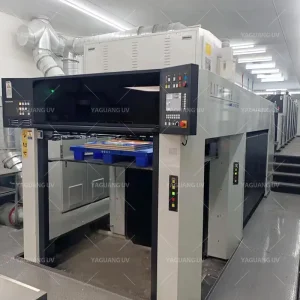
In modern manufacturing environments, light-based technology serves two critical paths: photopolymerization (curing) and photodegradation/disinfection (sanitizing). As leading custom UV sanitizing manufacturers and factories push the boundaries of photonics, industrial processes demand systems that are highly specialized, reliable, and compliant with severe international standards. The core physics remains shared: deploying specific ultraviolet wavelengths—typically ranging from 100nm to 400nm—to interact with organic compounds, whether to instantly cure specialized inks or to deactivate pathogenic cellular chains.
The necessity for precise spectral management has led to the development of hybrid, high-density UV LED arrays and precision mercury-vapor systems. To compete on a global scale, manufacturers can no longer rely on simple stock configurations. True industry leadership requires tailored design-to-order capability. This involves matching structural machinery specifications, defining heat signature tolerances, and satisfying complex electromagnetic safety profiles. This whitepaper analyzes the industrial landscape, illustrating why custom UV engineering sits at the center of modern food packaging, automated pharmaceutical lines, high-speed commercial printing, and cleanroom sanitization fields.
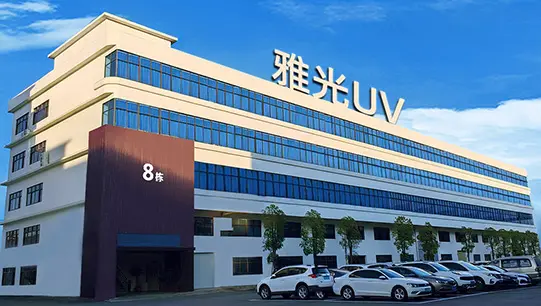
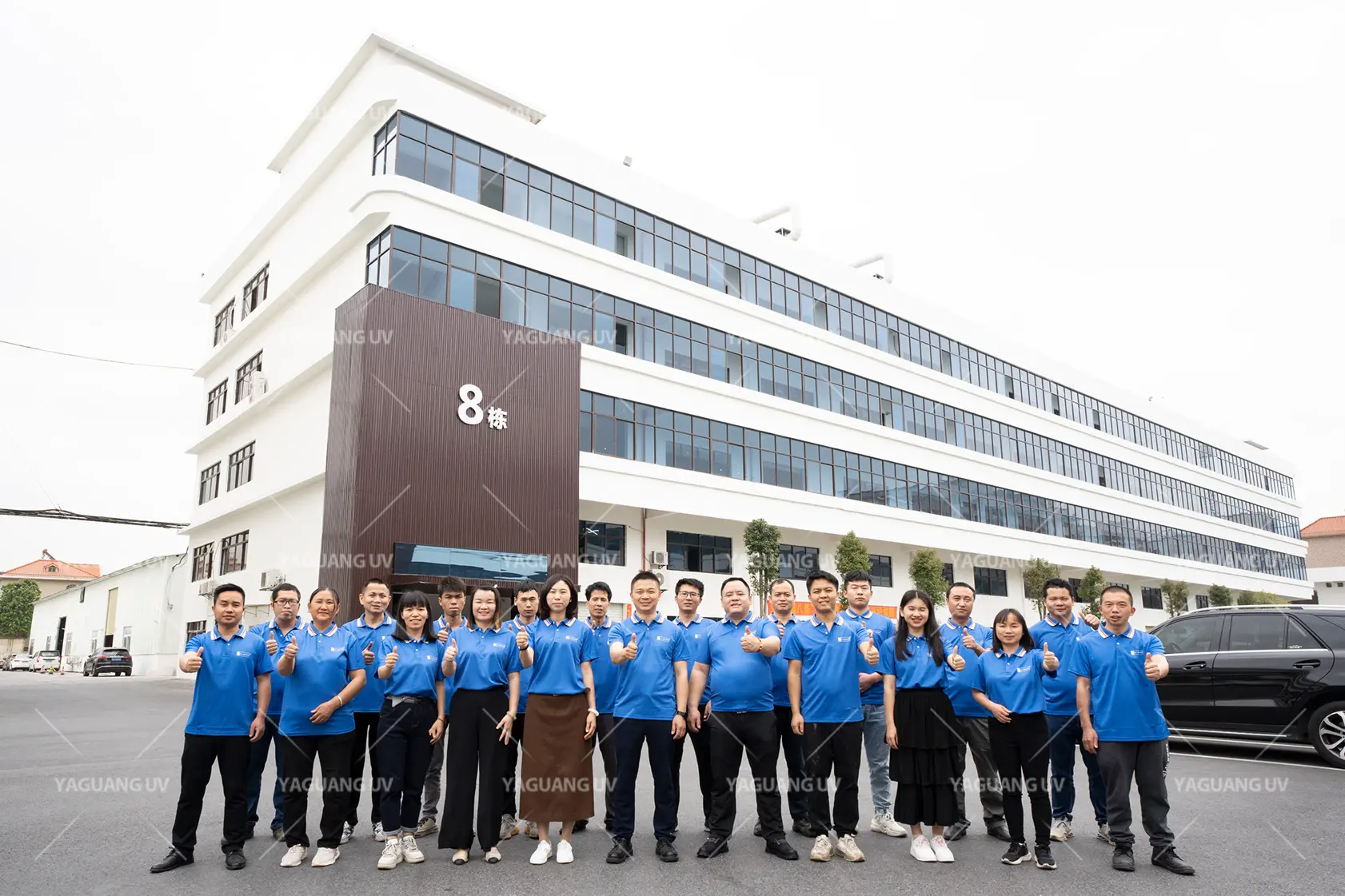
Established in 2006 and headquartered in Dongguan, a world-renowned advanced manufacturing hub in China, Dongguan Yaguang Machinery Co., Ltd. is recognized as a National High-tech Enterprise. Integrating R&D, advanced fabrication, international marketing, and technical services, Yaguang delivers customized industrial-grade UV systems configured for heavy-duty machinery.
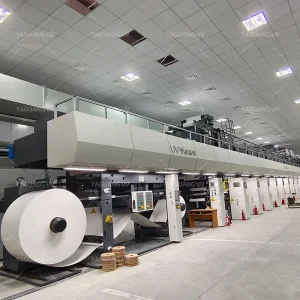
Our technical capabilities cover the entire spectrum of high-speed printing, coating, and localized packaging sanitation. Our solutions integrate smoothly into offset printing, flexographic printing, gravure printing, metal printing, and various industrial coating frameworks. Over nearly two decades, Yaguang has prioritized research, developing patents and structural improvements that ensure our systems withstand round-the-clock commercial operations while preserving thermal stability and minimizing energy profiles.
Contact Our Engineering TeamProcuring custom industrial hardware requires a careful balance of component availability, design flexibility, and cost control. As a premier hub for custom UV system fabrication, China’s industrial ecosystem provides several structural advantages that make high-volume custom production viable:
Operating in Dongguan places Yaguang at the center of the world's most dense electronic and mechanical supply chain. We source raw synthetic quartz sleeves, high-purity aluminum alloys, customized reflectors, and advanced micro-controllers within a 50-mile radius, speeding up design iterations and reducing transport dependencies.
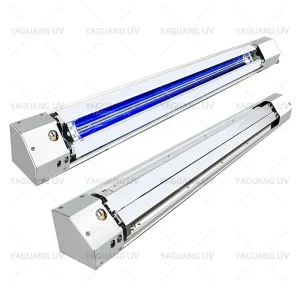
Unlike manufacturers that rely on third-party design houses, our in-house engineering team designs, mills, and tests custom components on-site. Whether modifying a lamp housing to fit a Heidelberg offset press or shaping a custom radiation shield, our fast design loops lower development costs.
Optimized labor costs and efficient materials sourcing allow us to invest in high-grade raw components, such as imported LED chips and heavy-duty quartz tubes. This delivers robust, long-lasting industrial equipment at an accessible price point.
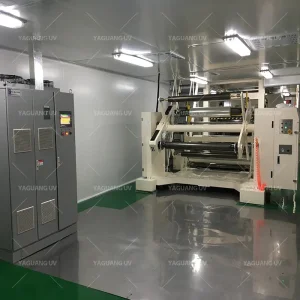
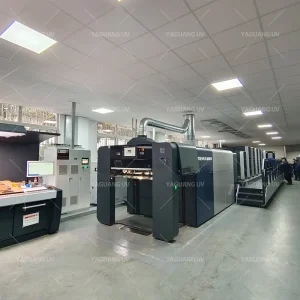
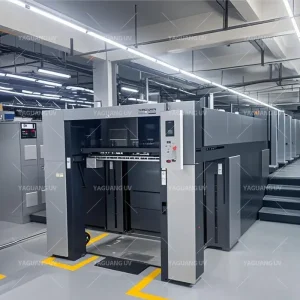
Yaguang’s factory floor utilizes precise machining equipment and strict QA procedures. Each system undergoes continuous operation testing before dispatch to verify steady UV output, correct electrical draws, and proper thermal management. Our factory facilities handle complex metal fabrication, circuit board integration, and final assembly in-house.
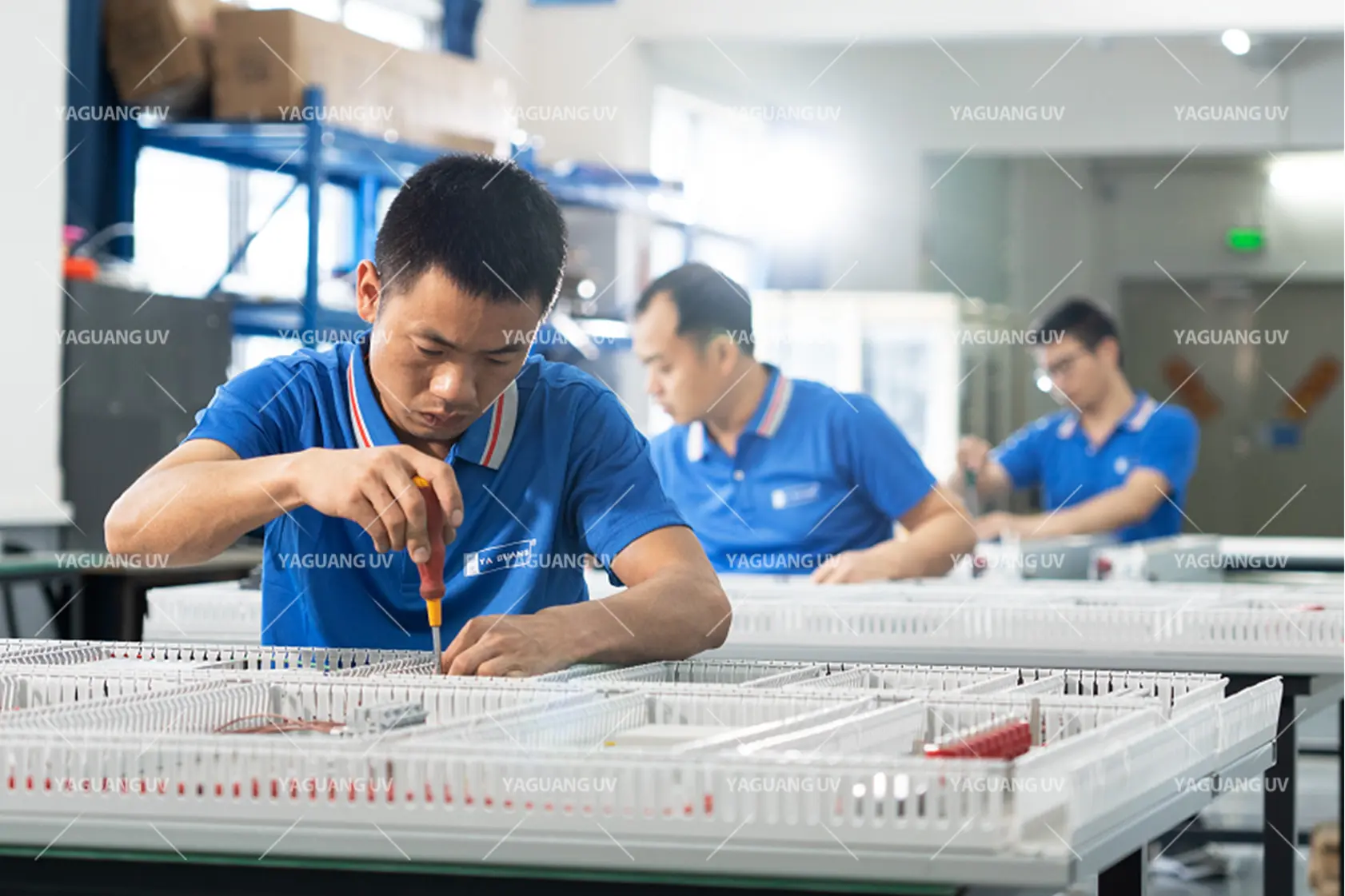
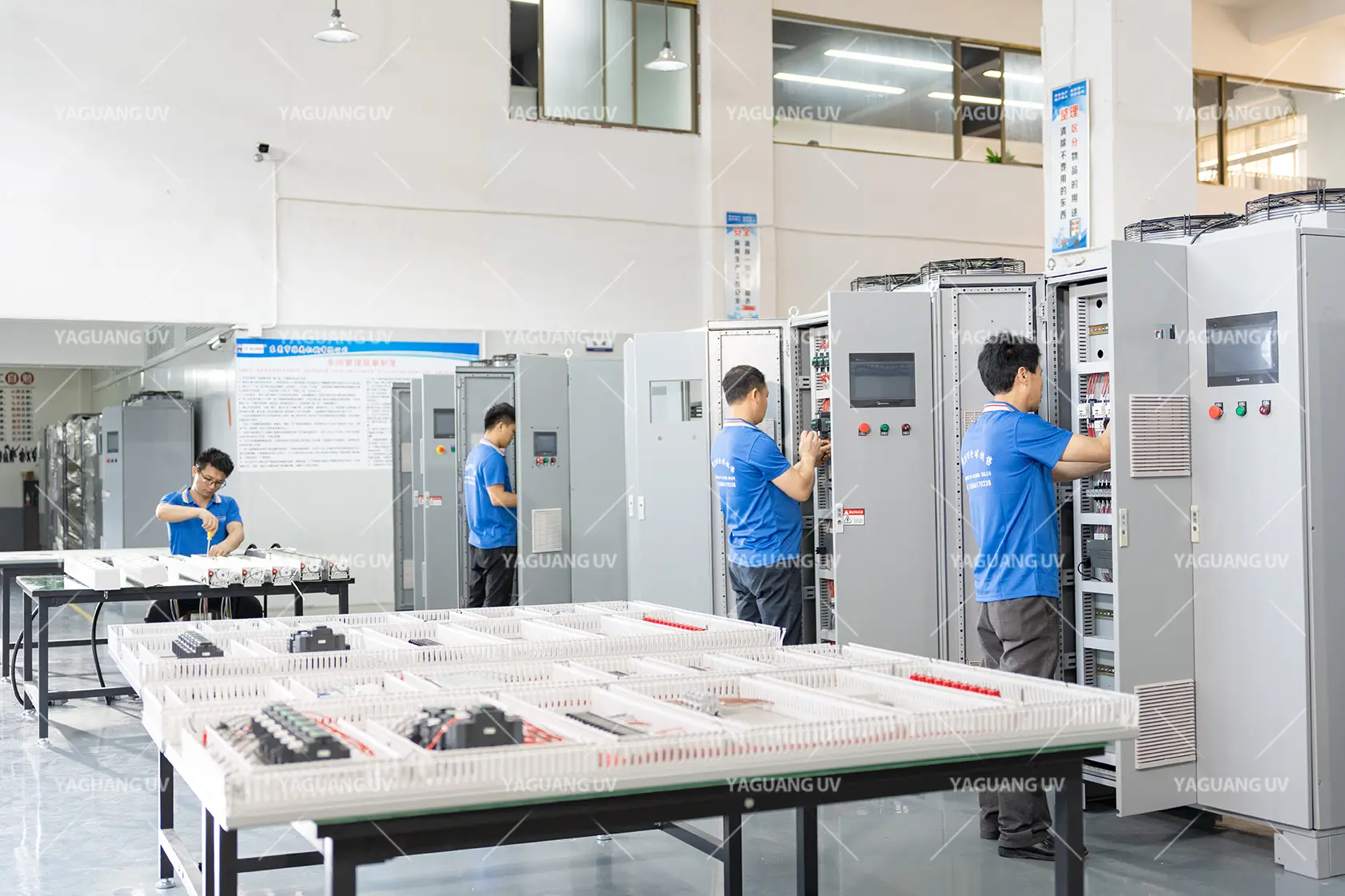
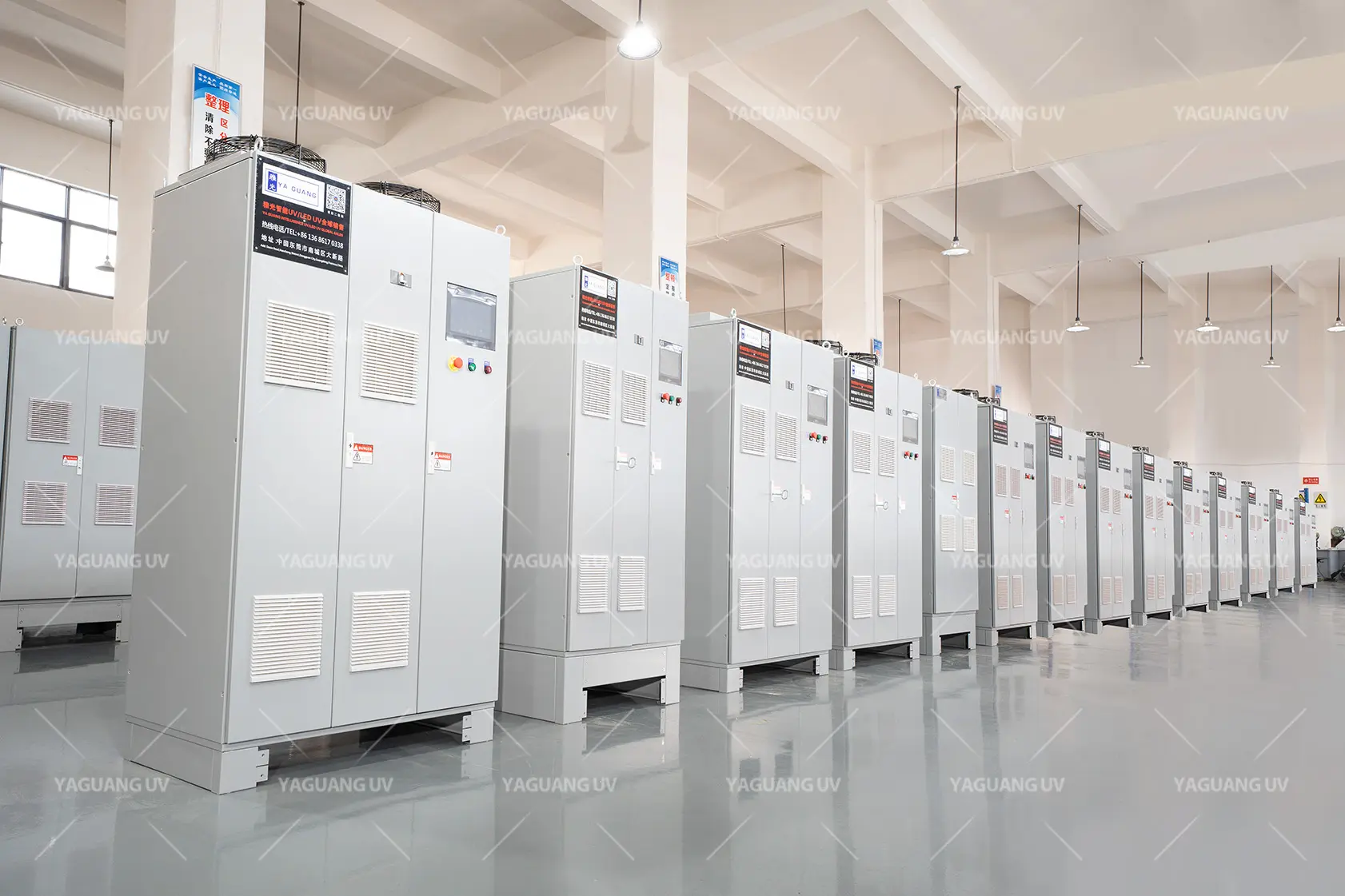
Yaguang’s engineering team consists of highly experienced professionals with over 10 years of expertise in UV system development, debugging, and maintenance. They excel in adapting UV systems to various printing machinery models and offer professional guidance on UV printing processes and troubleshooting.
Patents & Certifications: Over nearly two decades of rapid development, the company has obtained multiple patents and CE certification, solidifying its position as a leader in China’s UV curing industry. Our adherence to international regulatory baselines ensures smooth deployment across regulated industrial markets.
Yaguang’s products are exported worldwide, with over 2,000 UV systems installed globally. Its solutions are compatible with leading printing machinery brands such as Heidelberg, KBA, Roland, Komori, Mitsubishi, and Ryobi, as well as sheet-fed metal printers like Fuji, Queley, and Ruiyuan.
For the past 20 years, Yaguang has always adhered to the core values of "customer first, quality first, continuous improvement, and sustainable operation", committed to creating maximum value for customers. This commitment has won unanimous recognition from domestic and foreign customers.
Deploying high-power UV equipment globally requires strict adherence to safety codes and local operating procedures. Custom UV sanitizing and curing installations generate high optical energy, meaning system safety, shielding, and cooling must be designed to withstand local industrial conditions.
Industrial plants in North America, the EU, and Asia-Pacific enforce rigorous mechanical safety standards. Custom UV installations must meet several criteria to receive site operational approval:
Different chemical compounds respond to distinct ultraviolet bands. Our engineering department configures the spectral output of each system to match the exact requirement of the substrate and formulation:
The standard range for deep polymer curing, offset inks, and protective varnishes. LED technology excels here, offering high-efficiency output and deep chemical penetration.
Crucial for specialized chemical syntheses, paint cross-linking, and structural surface hardening.
Commonly referred to as the germicidal band. 254nm mercury lines or 275nm LED arrays are optimized for sanitizing surfaces, packaging materials, and cleanroom air paths.
UV exposure systems are integrated directly into processing lines rather than operating as standalone units. Our custom designs accommodate the physical limitations and production speeds of different industries:
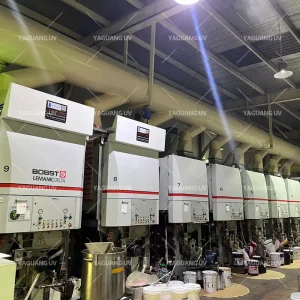
Retrofitted into machinery from brands like Heidelberg or Komori. These systems must cure inks within milliseconds on sheets moving at up to 18,000 sheets per hour, while keeping heat transfer to paper stocks low.
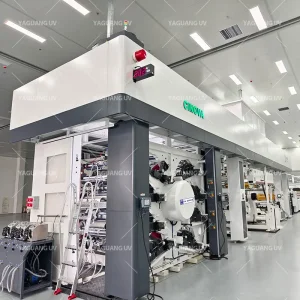
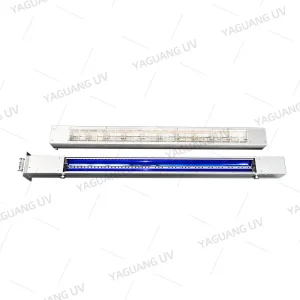
Often integrated into continuous web presses for flexible film and label substrates, utilizing compact LED light heads that fit into tight mechanical spaces.
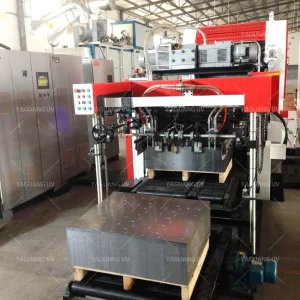
Utilized on heavy lines from makers like Fuji and Ruiyuan, where high thermal loads cure thick, chemical-resistant protective coatings on sheet metal.
Provides surface sanitization on conveyor lines, reducing bacterial contamination on plastic containers, bottle caps, and medical device packaging prior to filling.
The industrial UV sector is undergoing a transition driven by regulatory shifts, energy costs, and a demand for smart diagnostics:
The difference lies in the chemical and biological processes triggered by the light. UV curing uses UV-A wavelengths (typically 365nm to 395nm) to initiate polymerization in photopolymer formulations, instantly hardening inks, adhesives, and coatings.
In contrast, UV sanitizing targets DNA and RNA structures in micro-organisms, using UV-C wavelengths (typically 254nm to 275nm) to prevent replication and neutralize pathogens on surfaces and packaging.
Our engineering team designs custom integration kits. We create custom brackets, light shield boxes, and electrical interface controls that communicate with the press’s PLC. This ensures the UV system switches on and off based on sheet detection, while maintaining necessary cooling and safety shielding.
Water-cooled systems route chilled water through cooling channels in the LED array. This maintains stable temperatures in high-power applications, making them suitable for high-density systems and heat-sensitive films.
Air-cooled systems use cooling fins and exhaust fans. They offer a simpler mechanical setup and lower installation costs, but are better suited for medium-power applications or environments where plumbing a chiller is impractical.
Traditional mercury-vapor lamps typically run for 1,000 to 2,000 operational hours before the quartz degrades and UV output falls below spec. Modern industrial UV LED modules can operate for 20,000 to 30,000 hours, provided they are kept within design temperature ranges by a proper cooling system.
Yes, our systems carry CE certification. We construct the power ballasts, control enclosures, and lamp heads to meet European low voltage and electromagnetic compatibility guidelines, ensuring they can be integrated safely into regulated industrial lines.
Lead times vary depending on system complexity. Standard custom systems usually take 4 to 6 weeks from approval of final drawings. Highly integrated OEM retrofits or high-power multi-lamp configurations may require 8 to 10 weeks to design, fabricate, and test.
 Yaguang Machinery